

Just three weeks after its full launch on January 20, 2026, Riot Games dropped a bombshell that sent shockwaves through the gaming world. The publisher announced it was reducing the 2XKO development team by approximately 50%—around 80 employees—citing insufficient player momentum to sustain a team of that size long-term .
Headlines screamed “failure.” Doom posters called it dead on arrival. But if you look closer at what’s actually happening in the fighting game community, a different story emerges. A story about a game that may not be the mainstream hit Riot hoped for, but has found something arguably more valuable: a passionate, dedicated core audience that isn’t going anywhere .
Here’s why 2XKO isn’t dying—it’s just finding its people.
The Layoffs: What Actually Happened
On February 9, Executive Producer Tom Cannon delivered the news directly to the community. The statement was transparent and measured: the game had attracted a passionate core audience, but overall momentum hadn’t reached the level needed to sustain such a large team long-term .
2XKO: One Month Later
| Metric | Status |
|---|---|
| Team Size | Reduced by ~50% (80 employees) [citation:9] |
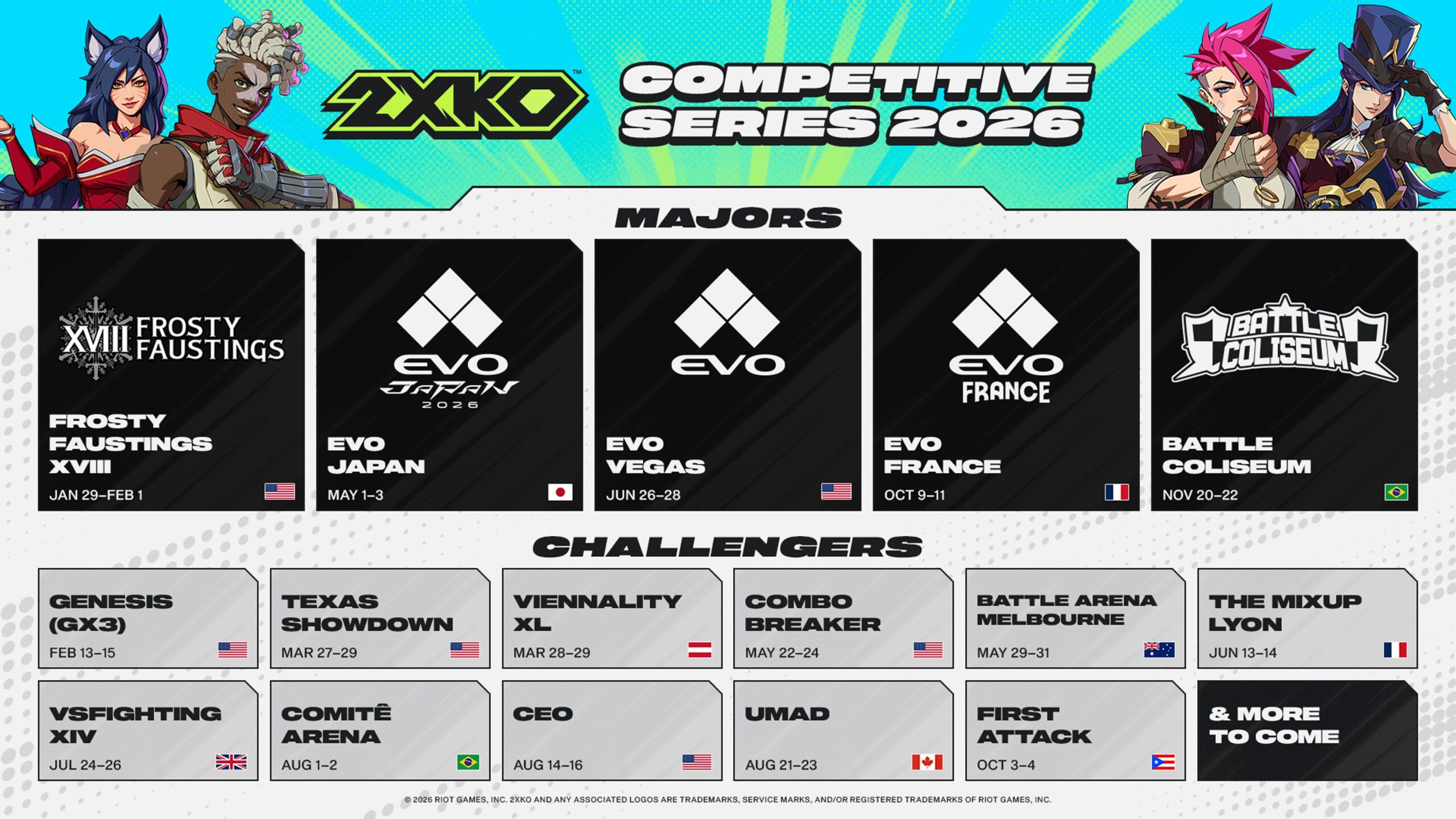
| Competitive Series | Unchanged – 20 sanctioned events in 2026 [citation:3] |
| Frosty Faustings Viewership | 40,000+ peak concurrent viewers [citation:4] |
| EVO Vegas Registration | 3rd most-entered game [citation:5] |
| Community Sentiment | “Passionate core audience” – Tom Cannon [citation:1] |
Affected employees received a minimum of six months severance and help finding other roles within Riot where possible . Designer Patrick Miller, who spent 10 years on 2XKO, shared on social media that he received “30min notice” despite over a decade at the company .
Crucially, Cannon emphasized: “This isn’t a judgment on individual Rioters or a signal that the journey is over. We’re reshaping the team to give 2XKO a more sustainable path forward” .
What the Numbers Actually Say
While casual player numbers may have disappointed Riot, the competitive picture tells a different story.
At Frosty Faustings XVIII, 2XKO’s first official Major, the tournament peaked at over 40,000 concurrent viewers with an average of 14,269 throughout the broadcast . Notably, the highest viewership moment wasn’t the grand finals—it came during the lower bracket semifinal where the last non-North American player’s run added international stakes .
Over 75% of viewership came from Twitch, with English-language broadcasts dominating and notable traction from French-speaking audiences . The tournament attracted close to 850 entrants, the highest overall entrant count reported across events at Frosty Faustings XVIII .
Perhaps most telling: EVO Vegas early registration shows 2XKO as the third-most entered game, behind only Street Fighter 6 and Tekken 8 . For a game barely two months old to outpace established fighting game staples is remarkable.
The FGC Factor: Why This Game Will Last
The fighting game community operates differently from mainstream esports. It’s a scene built on locals, rivalries, and decades of tradition—not explosive growth or massive prize pools .
2XKO has tapped into this ecosystem in ways that matter. Fighting game legends have embraced it wholeheartedly. SonicFox, Leffen, and Supernoon are already deeply invested, creating compelling storylines and rivalries that keep audiences engaged . The community also witnessed a breakout moment when 16-year-old online warrior bleed won Frosty Faustings XVIII, defeating all three veterans in the bracket .
SonicFox called the tournament “genuinely so fun to watch” and hailed bleed as the next prodigy in 2XKO .
The key insight, as Abios Gaming notes, is that “fighting games are usually only popular with other fighting game fans. They are not going to have the same mainstream draw as League of Legends or Counter-Strike” . The path to success isn’t mass appeal—it’s understanding and embracing the FGC’s strange quirks and competitive nature.
