

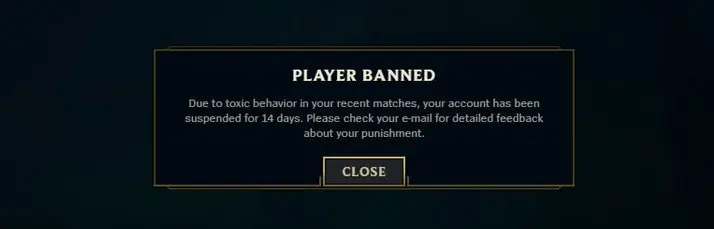
When Riot Games rolled out their new chat ban system in Patch 26.5, they probably expected some discussion around the policy shift from chat restrictions to full gameplay bans . What they didn’t expect was for a single example sentence to become a global meme that perfectly illustrates the cultural divide in how different regions play League of Legends.
The sentence in question: “idiot jungler why aren’t you ganking my lane” . In Riot’s official explanation, this was presented as an example of “mild flame”—the kind of behavior that won’t trigger an instant gameplay ban, though repeated offenses still escalate through progressive penalties .
Western forums lit up with debate. Is “idiot” mild? Where’s the line? But in China, players had a completely different reaction—they just laughed and said “still too soft, come experience our servers” . The contrast reveals everything about how different gaming cultures interpret the same policy.
Here’s why the same sentence sparked such different reactions worldwide.
Western Reaction: Where’s the Line?
In Western communities, Riot’s example sparked serious debate about content moderation boundaries. Players questioned whether a sentence containing a direct insult qualifies as “mild,” and many argued it shouldn’t be normalized . The discussion reflected deeper concerns about consistency—if “idiot” is mild, what language actually triggers the severe threshold?
Regional Reactions to Riot’s Chat Ban Example
| Region | Reaction | Key Quote |
|---|---|---|
| Western | Debate about line-drawing: Is “idiot” mild or severe? | “If that’s mild, what actually gets you banned?” |
| China | Laughter at “soft” standards | “Still too gentle. Come experience the Chinese server.” |
| Korea/Japan | Policy-focused discussion | Discussion about enforcement consistency |
Riot’s “just a capybara” acknowledged that while this sentence is considered mild, repeated use will still trigger escalating penalties through the progressive system . The Instant Feedback System FAQ confirms that milder offenses lead to chat restrictions or ranked restrictions, while excessive negative behavior can escalate to permanent suspension .
The Western debate centered on where the line should be drawn. Players shared personal experiences, frustration with intentional feeders, and concerns about AI moderation accuracy . The discussion was nuanced, if sometimes heated—exactly what you’d expect from a community trying to understand new rules.
Chinese Reaction: “Still Too Soft”
Across Chinese social media and forums, the reaction couldn’t have been more different. When players saw Riot’s example sentence, they didn’t debate its severity—they just laughed at how “gentle” it seemed compared to the reality of their servers .
Comments like “still too soft, come experience the Chinese server” and “this wouldn’t even register as mild flame on our servers” captured the sentiment perfectly . The phrase “too gentle” became a running joke, with players sharing screenshots of what actual “mild flame” looks like in their games.
This reaction reflects the very real cultural differences in online communication. What Western players consider aggressive might be baseline banter in other regions. Chinese servers have long been known for their intense communication style, with players joking about the “Zu’an” culture named after the notoriously chaotic server .
Riot’s attempt to create a universal moderation standard inevitably runs into these cultural differences. A sentence that one region considers borderline might be laughably tame in another, and the same policy applied globally will be interpreted through wildly different cultural lenses.
What This Tells Us About League’s Global Community
The divergent reactions to Riot’s example reveal something deeper about the challenge of managing a global game. League of Legends isn’t just played across different countries—it’s played within entirely different communication cultures, each with its own norms about what constitutes acceptable trash talk.
Riot’s policy draws a clear line: severe offenses like hate speech, threats of violence, and extreme aggression trigger immediate gameplay bans . Mild flame, even when it includes words like “idiot,” gets progressive penalties over time . But that policy is interpreted through regional filters that Riot can’t fully control.
The company has also announced plans to extend behavioral monitoring to DMs in 2026, addressing a common workaround where players move harassment outside of in-game chat to avoid detection . This recognizes that toxic behavior doesn’t stop when the match ends.
For players wondering where they stand, the Instant Feedback System FAQ clarifies that “retaliation is not an acceptable or justifiable behavior”—even if someone else started it, you’re responsible for your own actions . The best response to toxicity is silence, mute, and report.
As one Chinese player put it: “Riot’s new rules are good. But they should spend a week on our server before they decide what ‘mild’ means.”


