

This Monday Night Football analysis takes an explainer-style look at a matchup that initially appeared straightforward but quickly turned into a study in momentum management. The 49ers (7–4) entered trying to stabilize their home performances, while the Panthers (6–5) carried three straight road wins and a growing sense of belief.
With Christian McCaffrey facing Carolina for the first time since being traded, the emotional undertone was unavoidable. But instead of a highlight-heavy offensive show, the game unfolded as a breakdown of structure, sequencing, and situational choices.
How Purdy’s Turnovers Reshaped the First-Half Format — and Why Carolina Couldn’t Finish – Monday Night Football analysis
Brock Purdy’s first-half struggles immediately altered how the 49ers approached the game. His first pass — intercepted by Jaycee Horn — derailed the opening script. A deep-ball misfire picked by Mike Jackson and another badly timed throw intercepted again by Horn tightened the field dramatically.
What Each Turnover Did to the Game’s Structure
| Sequence | Event | Resulting Panthers Drive | Outcome |
|---|---|---|---|
| INT #1 | Jaycee Horn jumps first play | Starts at midfield | Field goal only |
| INT #2 | Deep shot picked by Mike Jackson | Enters red zone | Drive stalls at SF 4 |
| INT #3 | Horn’s second takeaway | Prime scoring chance | Young INT to Ji’Ayir Brown |
Carolina, however, struggled to complete the sequence needed to turn giveaways into touchdowns. Examples included:
- Tetairoa McMillan dropping a simple third-down out
- A red-zone intentional grounding that wiped out momentum
- Bryce Young’s fade drifting too long, allowing Ji’Ayir Brown to undercut it
Format takeaway: turnovers created opportunity, but the Panthers didn’t finish the structural steps that translate field position into points.
How McCaffrey Became the Foundation of San Francisco’s Adjusted Offensive Plan – Monday Night Football analysis
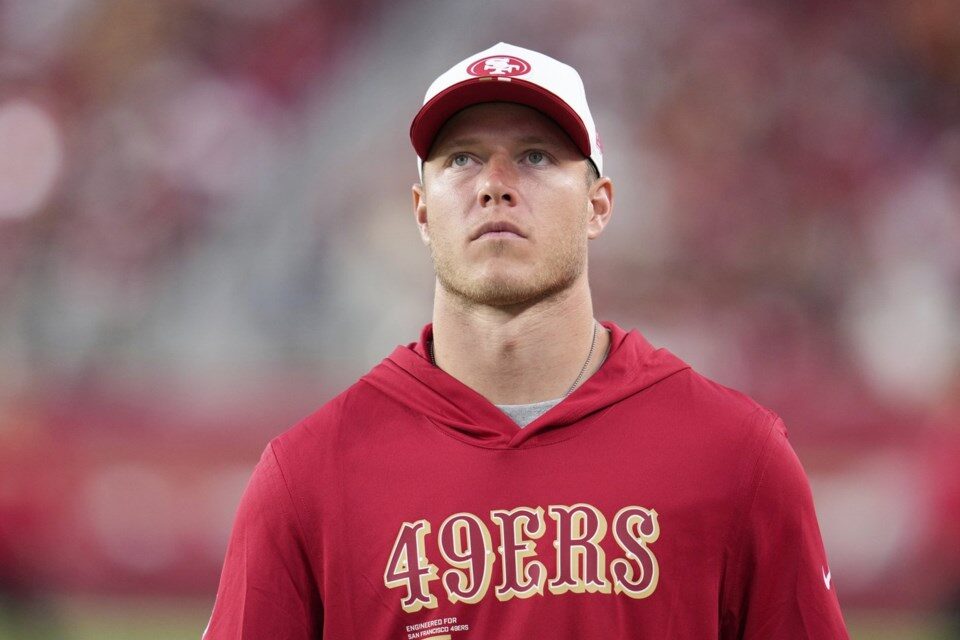
Once Purdy’s rhythm collapsed, Christian McCaffrey became the center of San Francisco’s entire operation. His 31 touches for 142 total yards weren’t just productive — they provided the framework the offense needed to regain balance.
The clearest example came in the third quarter with a 13-play, 80-yard touchdown drive. In explainer terms, that possession worked because San Francisco simplified the structure:
- Early down runs to avoid third-and-long
- Motion and misdirection to slow Carolina’s pursuit
- Guard-pull concepts that created controlled interior lanes
McCaffrey’s 12-yard touchdown run was the payoff. That drive turned the game from unstable to manageable and shifted responsibility back to the defense.
Why the 49ers’ Defensive Structure Held While Carolina’s Youth Showed Flashes – Monday Night Football analysis
San Francisco’s defense performed with a clear identity, prioritizing spacing and red-zone discipline. Ji’Ayir Brown’s two interceptions capped off a night of sound positioning and route anticipation. Luke Farrell’s timely sack halted a Panthers drive that could have tightened the score further.
Even without Fred Warner, the 49ers kept every Carolina scoring chance contained. The Panthers posted just nine points, all coming after turnovers — an example of “bend but don’t break” applied consistently.
Carolina’s rookies offered encouraging highlights:
- Tetairoa McMillan’s 29-yard touchdown, showing sharp footwork after early mistakes
- Rico Dowdle’s quick-hitting edge runs, giving Bryce Young immediate outlets
- Young finishing 18/29 for 169 yards, flashing rhythm but struggling on late reads
The Panthers demonstrated young talent but lacked the layered execution San Francisco applied.
How Injuries, Situational Calls, and Late Decisions Influenced the Final Stretch
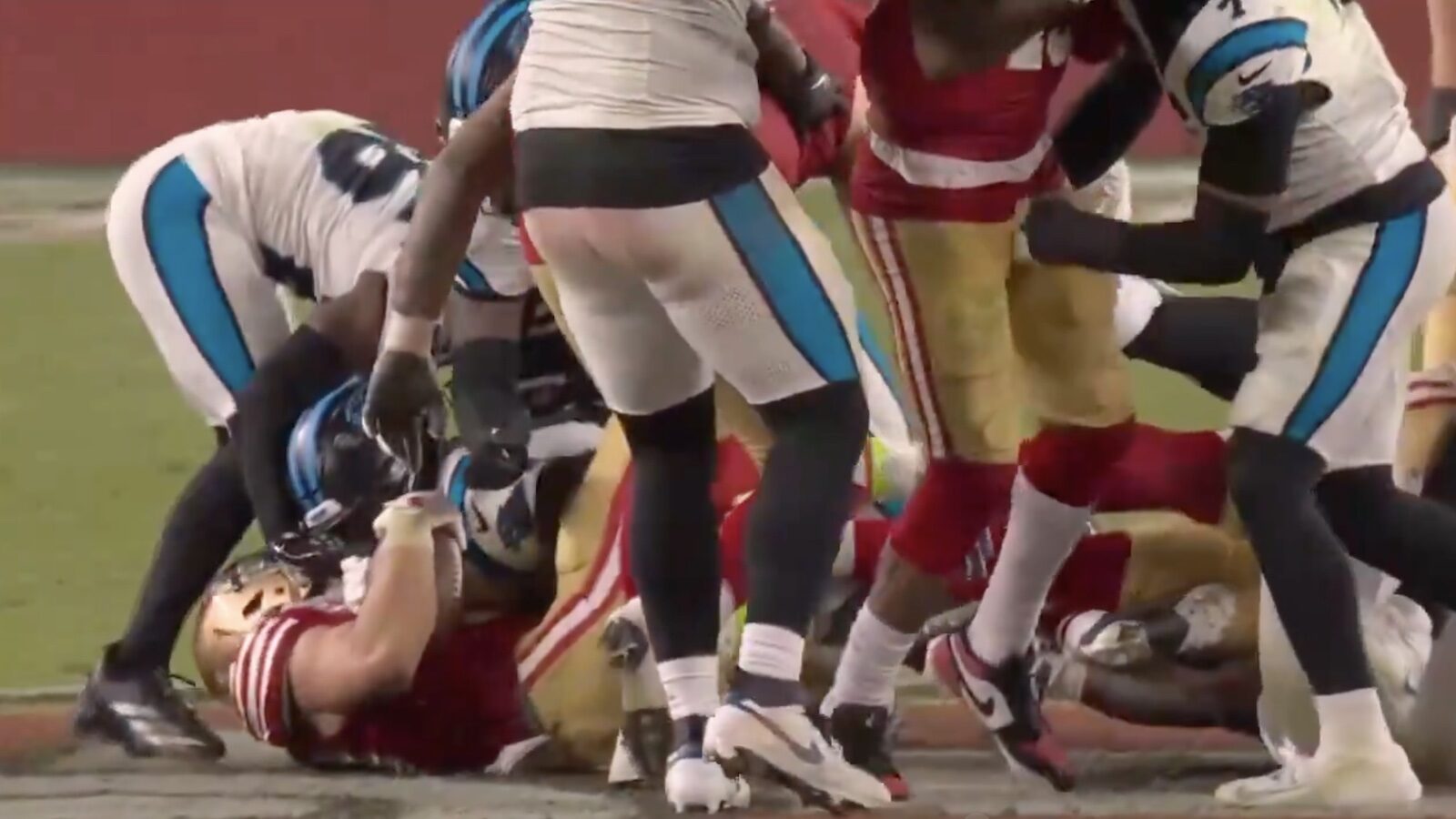
Primetime games often shift on small situational moments, and this one was no different. Jaycee Horn — the driving force behind Carolina’s early success — left with a concussion, altering how the Panthers shaded routes in the second half. A brief altercation between Jauan Jennings and Moehrig added tension, though it didn’t impact the tactical structure.
San Francisco also played without Brandon Aiyuk, pushing more responsibility onto McCaffrey and short-area passing. Emergency kicker Matt Gay performed cleanly despite being elevated that morning. Meanwhile, Panthers rookie Robinson opened the game with his first NFL start, adding a developmental layer.
From a standings lens:
- The 49ers advanced to 8–4, strengthening their NFC West pursuit
- The Panthers fell to 6–6, missing the chance to gain upper ground in the NFC South
The situational summary: Carolina had structural openings but didn’t maximize them.
Conclusion — What This MNF Explainer Shows About Both Teams’ Foundations
This Monday Night Football analysis highlights a simple truth: the 49ers didn’t win because everything clicked — they won because their structural responses held firm. McCaffrey carried the offensive load, while the defense tightened exactly when required.
The Panthers showed enough talent to stay competitive but lacked connection in their red-zone execution. As December approaches, both teams remain playoff factors, but both must clean up the foundational issues revealed under primetime lights.


