

On March 5, 2026, a new contender enters the crowded extraction shooter arena. Shrapnel 2.0 launches on Steam Early Access, but this isn’t just another indie extraction game—it’s a project backed by over $37.5 million in development funding and built by a team of industry veterans with pedigree from Call of Duty, Halo, BioShock, and Ghost of Tsushima .
The extraction shooter market is already dominated by heavyweights like Escape from Tarkov, Call of Duty DMZ, and Hunt: Showdown. So why does Shrapnel think it can compete? The answer lies in its complete technical reset, its focus on competitive integrity, and its unique integration of blockchain technology that actually serves gameplay rather than hindering it .
Here’s why Shrapnel 2.0 might be the most intriguing extraction shooter launch of 2026.

The Development Pedigree: AAA Veterans Take Aim
Shrapnel’s greatest asset is its development team. Neon Machine has assembled a roster of talent that reads like a who’s who of first-person shooter history .
Developer Background
| Franchise | Developer Experience |
|---|---|
| Call of Duty | Multiplayer design, weapon balancing, hit registration |
| Halo | Arena shooter fundamentals, map design, movement |
| BioShock | World-building, atmospheric tension, narrative depth |
| Ghost of Tsushima | Visual fidelity, combat systems, player immersion |
Technical Reset: Unreal Engine 5 & Competitive Integrity
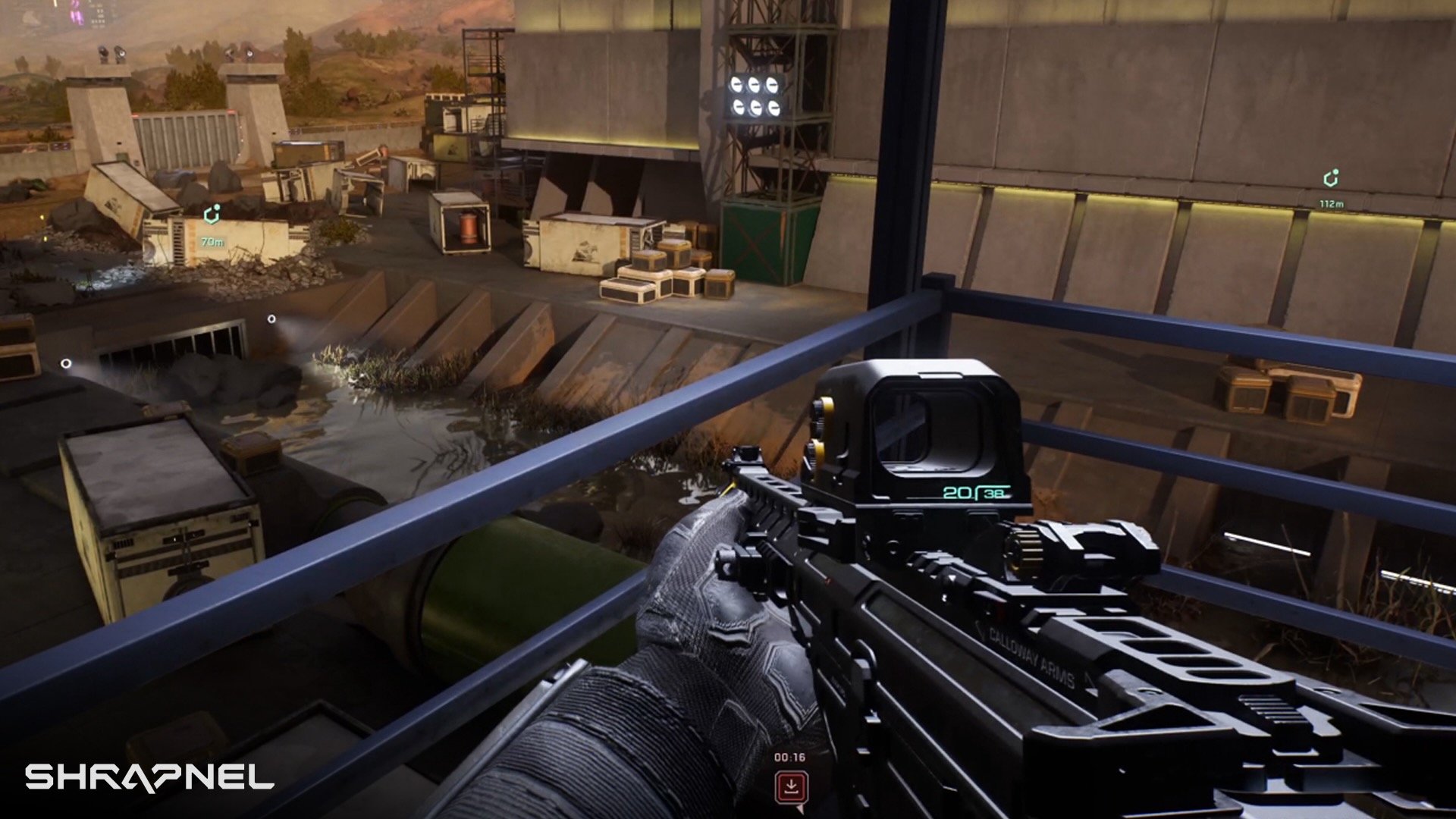
The transition to Shrapnel 2.0 is a full structural overhaul rather than a simple rebranding. Built on Unreal Engine 5, the game introduces high-fidelity graphics and reworked core systems to improve competitive fairness and performance stability. The development team focused heavily on solving long-standing issues such as hit detection and movement exploitation.
Key technical improvements include server-side bullet pooling to ensure consistent hit registration, elimination of speed-based movement exploits, and optimized performance during large-scale firefights. The new “move-stop-shoot” movement philosophy emphasizes timing, positioning, and controlled engagement rather than twitch-style speed mechanics.
This design places accuracy on discipline and strategy, creating a middle ground between highly tactical extraction shooters and fast-paced competitive shooters, while addressing community criticism from earlier builds.poor hit detection, and these revisions directly addressed community feedback . The team aims to provide a dependable competitive environment where skill matters more than exploiting netcode.
Blockchain Integration: Utility Without the Gimmick
Shrapnel differs from competitors through its integration of a player-owned economy powered by the $SHRAP utility token . But unlike many blockchain games that prioritize speculation over gameplay, Shrapnel’s approach actually enhances the experience .
How Blockchain Serves Gameplay
| Feature | Benefit |
|---|---|
| True Ownership | Players own cosmetics and Operators as tradeable assets |
| Shrapnel Marketplace | Official platform for secure trading |
| User-Generated Content | Create skins and maps, publish using $SHRAP |
| Community Economy | Players benefit from their contributions |
Players can truly own in-game assets, trade them securely, and even create user-generated content that becomes part of the game’s economy . This creates a virtuous cycle where engaged players are rewarded for their contributions.
The studio has secured over $37.5 million in development funding and recorded over 3.7 million game sessions and 37 million shots fired during initial testing phases . These numbers suggest genuine interest beyond crypto speculation.
The critical difference: Shrapnel doesn’t force blockchain on players. The core gameplay—Stockpile mode, Operator abilities, Sigma mechanics—works perfectly without touching the token economy . Blockchain enhances ownership without compromising accessibility.

The Road Ahead: Can It Compete?
Shrapnel 2.0 enters a highly competitive FPS market dominated by established titles such as Escape from Tarkov, Call of Duty: Warzone DMZ, Hunt: Showdown, and The Cycle: Frontier. Each competitor has its own strength—hardcore realism, casual accessibility, atmospheric design, or sci-fi setting. Shrapnel’s advantage lies in combining technical polish, competitive mechanics, and player-owned economy elements.
The game’s positioning focuses on responsive gunplay and meaningful extraction tension rather than pure realism or arcade speed. Its development pedigree, supported by Neon Machine, aims to attract players who want a middle ground between tactical extraction gameplay and competitive shooter responsiveness. Future updates will expand to five Operators, introduce more Tokyo map variations, and add systems like Battle Pass progression and daily missions during Early Access.
The biggest uncertainty is player reception toward blockchain integration. While the free-to-play model and optional crypto economy may help lower entry barriers, traditional FPS players may remain cautious. Success will largely depend on whether the game’s gunplay, performance stability, and competitive depth are strong enough to build a loyal community beyond the technology discussion.